

Schumann, Beethoven, Brahms – great names in the history of classical music. Even though none of them were from Chemnitz, they had close connections to composers who were born or worked here. Names such as Philipp Dulichius, Theodor Kirchner, and Christian Gottlob Neefe are part of our cultural heritage and deserve our attention.
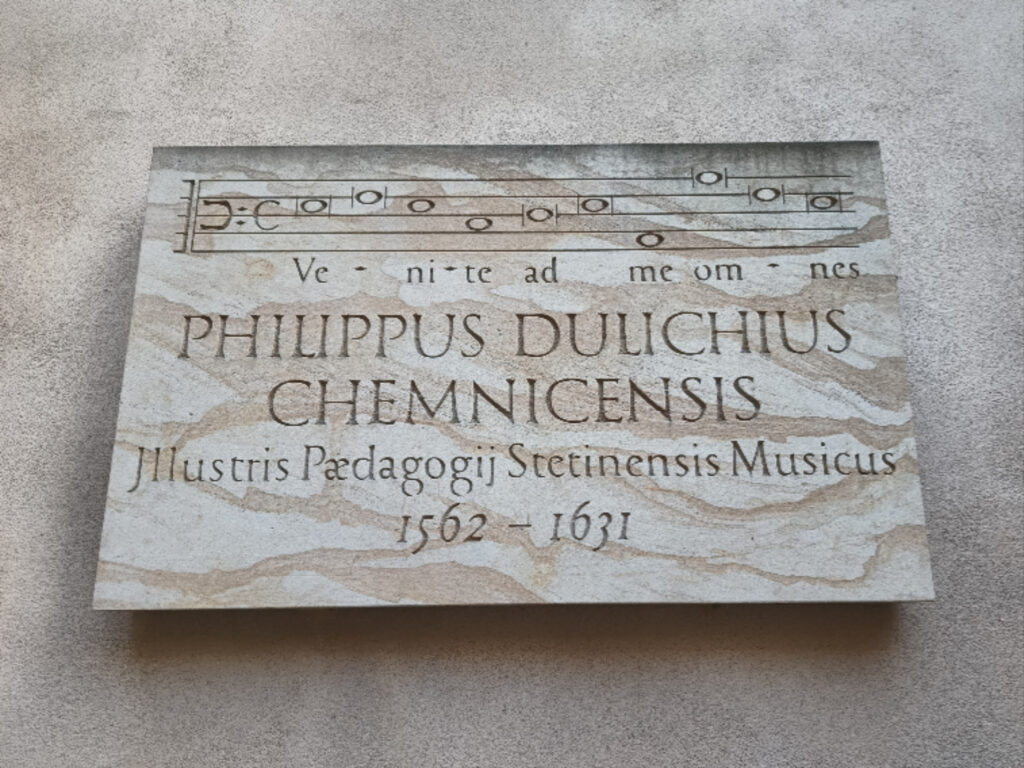
Philipp Dulichius (*1562, †1631)
Probably born in Chemnitz, Dulichius is considered one of the most important composers of the late Renaissance. After studying in Leipzig and Frankfurt an der Oder, he worked for more than 40 years as a cantor in Stettin. There, he had a lasting influence on musical life and was highly respected for his outstanding work.
Dulichius composed almost exclusively sacred vocal music, especially Latin motets. With a style shaped by Dutch polyphony, he became known as the “Palestrina of the North.” More than 220 of his works have survived to this day. Even though he is little known today, he is regarded as significant in musicology and remains one of the earliest important composers with roots in Chemnitz.
Theodor Fürchtegott Kirchner (*1823, †1903)
Kirchner, born in Neukirchen near Chemnitz, was a composer, organist, and pianist. His talent was recognized early and led him to the conservatory in Leipzig. There, he met figures such as Robert Schumann and Felix Mendelssohn Bartholdy, with whom he maintained close friendships. Particularly noteworthy: Johannes Brahms was among his close friends and was taught by Kirchner.
Kirchner lived and worked in Zurich, among other places, before later returning to Germany with his family, where he served as director of a music school. Despite his great artistic productivity, he was never fully able to make a living from his music, and Brahms supported him financially on several occasions. His work consists mainly of Romantic piano pieces, songs, and chamber music.

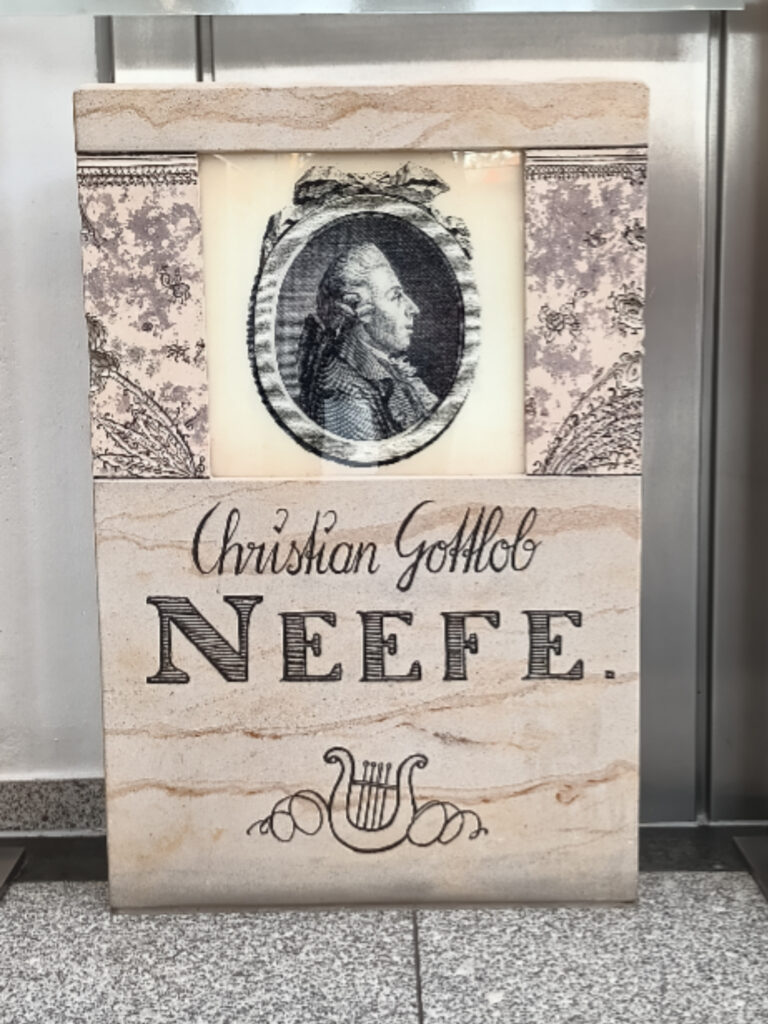
Christian Gottlob Neefe (*1748, †1798)
Born in Chemnitz into a family of craftsmen, Neefe received his first music lessons at the age of twelve at St. Petri Church. He later worked as a composer, organist, conductor, and music scholar.
Alongside his studies in law, he pursued a determined musical career and later worked as a theatre director. One of his students was Ludwig van Beethoven, whom he supported early on and significantly influenced. Neefe was not only a musician but also a committed thinker of the Enlightenment, with strong interests in education, culture, and politics. His biography shows that even in the 18th century, Chemnitz was a place where talent and education could come together.
Chemnitz – not only a city of industry, but also the home of remarkable musical personalities. Their works show how closely the history of the city is connected to music.
You can listen to an excerpt from Neefe here: